
Lough Neagh Partnership Supports Rights of Nature While Calling for Urgent Action to Restore Lough Neagh
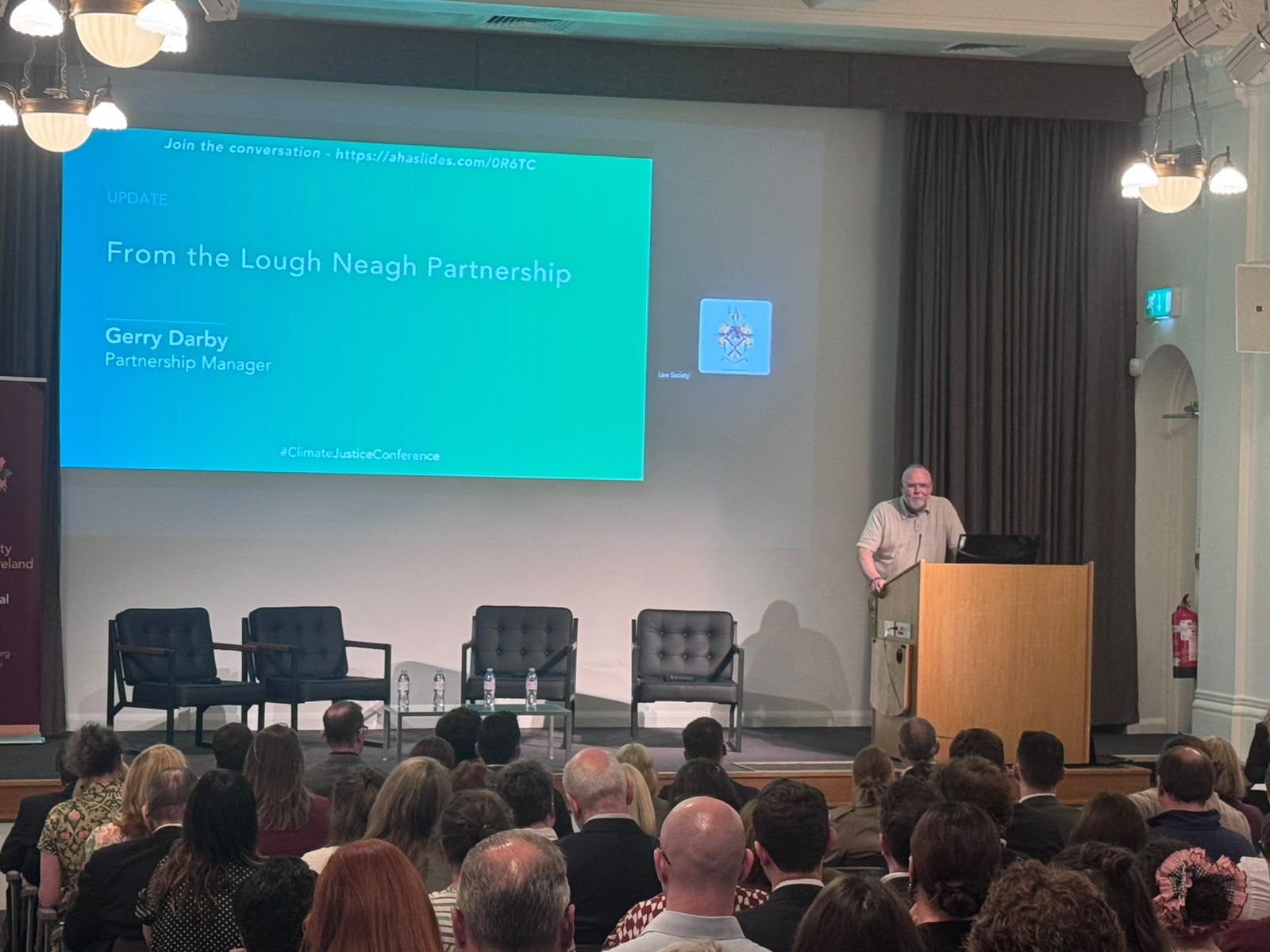
Lough Neagh Partnership Manager Gerry Darby was recently invited to speak at the Law Society of Northern Ireland’s Climate Justice Conference.
The conference explored pioneering legal frameworks, including granting legal personhood to ecosystems, as a means of addressing the ecological crisis facing Lough Neagh. The event also highlighted international examples, including the Mar Menor case study in Spain.
Professor Eduardo Salazar-Ortuño, who led the successful campaign to secure Rights of Nature status for the Mar Menor lagoon following its ecological collapse in 2016, outlined how a similar legal model could help transform the future of Lough Neagh.
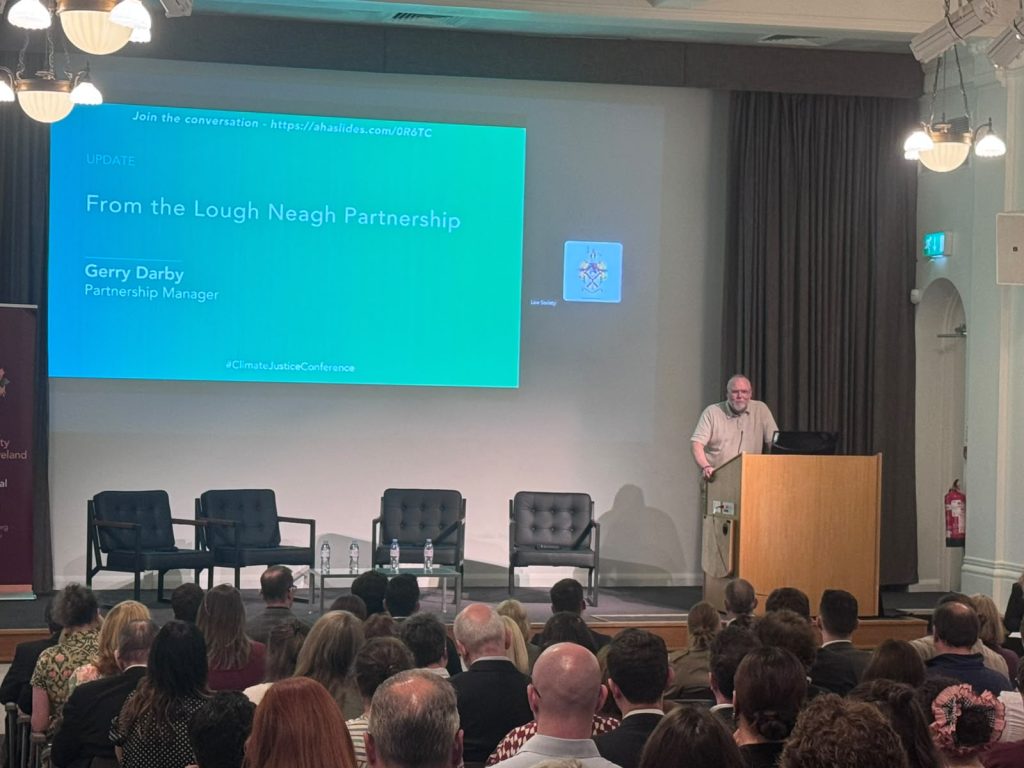
In his address to the conference, Gerry expressed his support for the Rights of Nature approach, which recognises the right of nature and landscapes to exist, flourish and be restored. However, he emphasised that, in the case of Lough Neagh, there are immediate ecological issues that must be addressed as a priority.
Gerry highlighted the highly eutrophic nature of Lough Neagh, with nutrient overload resulting from surrounding agricultural activity and wastewater treatment. He welcomed the recent recommendations made by the Office for Environmental Protection, including significant reductions in nutrient inputs through a new Nitrates Action Programme and increased investment in wastewater infrastructure by the Department for Infrastructure, describing these as essential starting points.
He also stressed that the challenges facing Lough Neagh extend beyond water quality. The lough is experiencing a significant loss of habitats and species, including a decline of more than 100,000 wintering birds and a near collapse in fly and eel populations.
Gerry further suggested that the impacts of invasive zebra mussels and climate change may have been underestimated when considering the causes of the lough’s ecological decline.
Looking to the future, Gerry identified the creation of a new management body as being fundamental to the long-term recovery of Lough Neagh. He highlighted the need for a coordinated approach involving government departments, local communities and major landscape organisations, including the National Trust and the Woodland Trust, alongside large-scale habitat restoration and catchment-based water quality programmes.
He concluded by suggesting that such a body would provide an important platform for further discussion around the Rights of Nature concept and the potential development of a long-term legal identity for Lough Neagh.
