
The lake and surrounding area form a unique ecosystem with various habitats, including open water, submerged vegetation, reed beds, lowland raised bogs, wet woodlands, fens, species-rich grasslands, and sandy shoreline areas. These habitats support a variety of fish, invertebrate, and plant species.
The Lough Neagh Ecosystem
Lough Neagh, the largest freshwater lake in the United Kingdom and Ireland, supports a diverse range of aquatic life.
Ecosystem Importance
- Water Filtration – Mussels and vegetation help purify the water.
- Biodiversity Support – The food web relies on a healthy balance of fish, plants, and invertebrates.
- Fisheries and Economy – Lough Neagh’s fish populations support local industries and recreation.
- Climate Regulation – Wetlands absorb carbon and help mitigate climate change effects.
Fish Species
- Pollan (Coregonus pollan) – An Ice Age relic found only in a few Irish lakes. Pollan is vital as a food source for larger fish and birds. They spawn in December and January in shallow, rocky areas of the lough. Young Pollan feed on zooplankton. The species is listed as a UK Priority Species.
- European Eel (Anguilla anguilla) – A critically endangered species. The European eel breeds in the Sargasso Sea near the Gulf of Mexico. Young glass eels migrate to Lough Neagh’s waters via the Gulf Stream, entering the system through the Lower Bann River. This commercially significant species supports local fisheries.
- Dollaghan Trout (Salmo trutta) – A genetically unique species of brown trout found only in the Lough Neagh system. Dollaghan spawn in the inflowing rivers of the lough. As a species sensitive to pollution, they are a key indicator of waterway health.
- Perch (Perca fluviatilis) – A species introduced to the lough due to its appeal to anglers.
- Roach (Rutilus rutilus) – Another introduced species common in the lough that forms part of the food chain.
- Pike (Esox lucius) – As a top predator, pike can grow over a metre in length. Large females can produce up to 500,000 eggs. Their varied diet includes smaller fish species, amphibians, small mammals, and even ducklings.
Bird Life
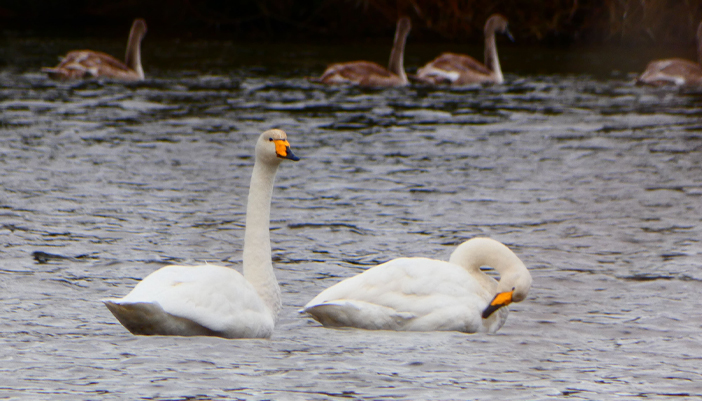
- Whooper Swans – Winter visitors that rely on Lough and surrounding area for food.
- Diving Ducks – Including species such as Scaup, Pochard, Tufted Duck, and Goldeneye.
- Cormorants & Herons – Fish-eating birds that are essential to the food web.
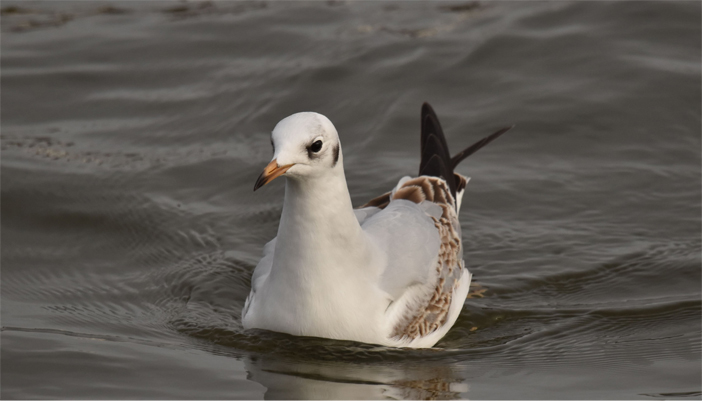
- Terns & Gulls – Indicator species reflecting the lake’s overall health.
Invertebrates
- Lough Neagh Fly (Chironomid midge) – A keystone species in the Lough Neagh ecosystem. It begins life as a red larva known as a ‘bloodworm’, which inhabits the sediment on the lough bottom. Learn more HERE
- Mysis relicta – A freshwater shrimp species and key prey for other species, such as the Pollan.
- Swan Mussel – Filter feeders that improve water quality by removing particles and algae.
- Mayfly and Caddis Fly – Important indicators of water quality and key prey for fish.
- White-clawed Crayfish (Austropotamobius pallipes) – A keystone species supporting various predators, found in some of the rivers that flow into Lough Neagh.
- Zebra Mussel (Dreissena polymorpha) – An invasive species introduced into Lough Neagh in 2005. It disrupts the ecosystem by outcompeting native mussels, altering nutrient dynamics, and clogging water infrastructure.
Plant Life
- Stoneworts (Charophytes) –Crucial for oxygen production and habitat formation.
- Reeds and Bulrushes –Important for nesting birds and bank stability
- Flowering Rush –A distinctive aquatic plant contributing to the ecosystem’s diversity.
Protecting Lough Neagh’s biodiversity is crucial to ensuring the sustainability of this valuable freshwater resource for generations to come. Image credits: Ciara Laverty.
